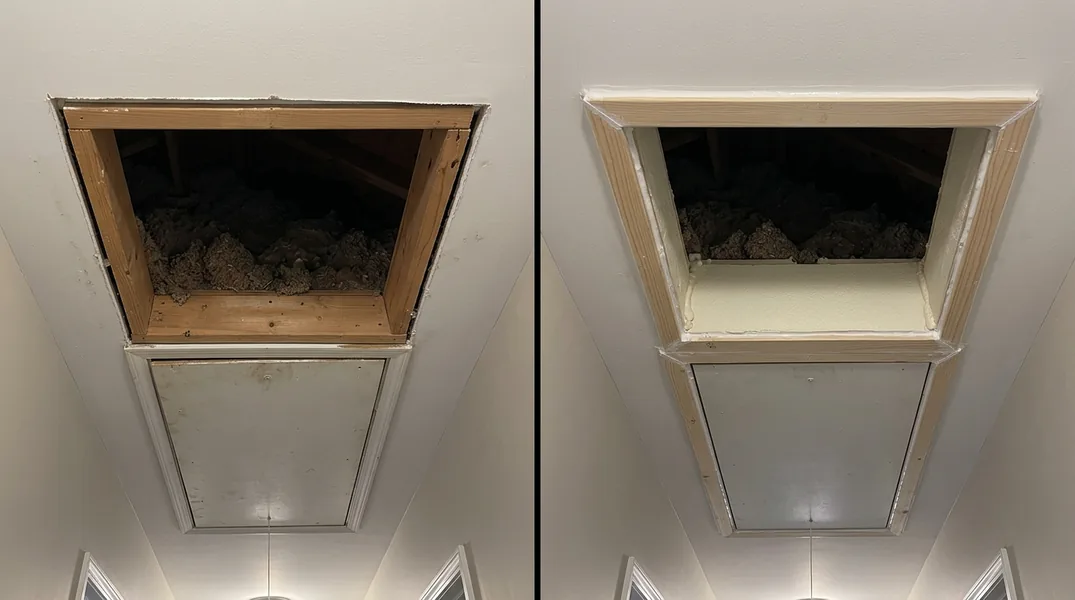
Understanding Spray Foam Attic Insulation: Open Cell vs Closed Cell
When it comes to improving your home's energy efficiency, attic spray foam insulation has become one of the most popular choices for homeowners in Champaign. However, not all spray foam is created equal. The two primary types, open cell and closed cell, have distinct differences that affect their performance, cost, and suitability for your home. Understanding these differences is essential before making an investment in your attic's thermal envelope.
Open cell foam is lighter and more flexible, expanding significantly after application to fill gaps and cavities. Closed cell foam, by contrast, is denser and more rigid, providing superior insulation value in a thinner layer. Both types create an air barrier when properly installed, but they serve different purposes depending on your home's specific needs and your climate zone. For homeowners in Champaign, where winters are cold and summers can be humid, choosing the right type makes a measurable difference in comfort and utility bills.
Open Cell Spray Foam Insulation: Benefits and Drawbacks
Open Cell Spray Foam Insulation is made up of cells that are not completely enclosed, allowing air and moisture to pass through the foam structure. This characteristic makes it an excellent choice for creating a semi-permeable vapor barrier, which can be advantageous in certain applications. Open cell foam typically has an R-value of approximately 3.5 to 3.8 per inch, meaning you need a thicker application to achieve the same insulation value as closed cell foam.
One of the primary advantages of open cell foam is its lower cost compared to closed cell alternatives. For budget-conscious homeowners, this makes it an attractive option for spray foam attic insulation projects. Additionally, open cell foam is excellent at sound dampening, making it ideal if noise reduction is a concern. The foam is also lighter, which reduces stress on attic structures. However, open cell foam is more permeable to moisture, which means it's not ideal for areas prone to water intrusion or in applications where a sealed attic insulation approach is necessary. In humid climates or basements, this characteristic can be problematic.
Closed Cell Spray Foam Insulation: Superior Performance and Protection
Closed Cell Spray Foam Insulation consists of cells that are completely enclosed, creating a dense, rigid foam with superior insulating properties. With an R-value of 6.0 to 7.0 per inch, closed cell foam provides nearly double the insulation value of open cell in the same thickness. This makes it the preferred choice for homeowners seeking maximum energy efficiency in a compact space.
The primary advantage of closed cell foam is its exceptional air-sealing capability, making it ideal for unvented attic spray foam applications. Its moisture resistance means it won't absorb water, making it suitable for areas exposed to potential moisture problems. Closed cell foam also provides structural reinforcement to your attic, adding rigidity to roof decking. The trade-off is cost. Closed cell foam typically costs 40 to 60 percent more than open cell, which can be significant for larger attic projects. Additionally, if moisture somehow becomes trapped within the foam, it cannot escape, potentially leading to issues if installation isn't performed correctly by experienced professionals.
Attic Spray Foam Insulation Cost in Champaign: What to Budget
Understanding the financial investment required for spray foam insulation is crucial for homeowners planning their energy efficiency upgrades. The cost of attic spray foam insulation varies based on several factors, including the foam type, attic size, existing insulation, and accessibility. Open cell foam typically ranges from 0.50 to 0.75 dollars per board foot, while closed cell foam ranges from 1.00 to 1.50 dollars per board foot. For a typical 1,500-square-foot attic, you might expect to invest between 1,500 and 3,500 dollars for open cell, or 3,000 to 7,000 dollars for closed cell.
While closed cell foam carries a higher upfront cost, many homeowners find the investment worthwhile due to superior energy savings and long-term durability. Open cell foam may be more economical initially, but it requires greater thickness to achieve comparable R-values, which can offset some savings. To get an accurate quote tailored to your home's specific needs, we recommend requesting a free estimate from Champaign Spray Foam Insulation. Our team will assess your attic, discuss your energy goals, and provide transparent pricing for your project.
Climate Considerations: Which Foam Type Is Right for Champaign Homes
Champaign experiences a humid continental climate with cold, snowy winters and warm, sometimes humid summers. This climate pattern influences which foam type performs best in local homes. During winter, your attic needs maximum insulation to prevent heat loss and ice dam formation. During summer, proper attic ventilation and moisture management become important. These seasonal demands make the choice between open and closed cell foam particularly relevant for Champaign homeowners.
For most Champaign properties, closed cell foam offers superior performance because it provides excellent insulation while simultaneously creating a moisture barrier. This is especially valuable during spring thaw and summer humidity periods. However, if your attic has proper ventilation and you're primarily concerned with insulation value and cost, open cell foam can perform adequately. The key is ensuring proper installation and adequate thickness. If your home experiences moisture issues, previous ice dams, or has a history of attic problems, closed cell foam's superior moisture resistance becomes a significant advantage. Consulting with local professionals who understand Champaign's specific climate challenges is essential for making the right choice.
Sealed Attic Insulation: Creating an Unvented Attic with Spray Foam
One of the most significant advantages of spray foam is its ability to create a sealed attic insulation system, also known as an unvented attic spray foam application. In traditional vented attics, insulation is placed on the attic floor, and ventilation allows air to circulate through the attic space. With spray foam applied to the underside of the roof deck, you create a conditioned attic space where the attic becomes part of your home's thermal envelope.
This approach offers several benefits, including better temperature control, reduced HVAC strain, and improved comfort in upper-floor rooms. Sealed attic insulation also protects ductwork and pipes from temperature extremes, improving their efficiency and longevity. Additionally, sealing the attic eliminates pathways for pest entry and reduces air leakage that compromises energy efficiency. Closed cell foam is particularly well-suited for this application due to its superior air-sealing properties and structural strength. For homeowners in Champaign considering a comprehensive energy upgrade, creating a sealed attic with spray foam can deliver dramatic improvements in comfort and utility bill reduction. Contact Champaign Spray Foam Insulation at (447) 895-0419 to discuss whether a sealed attic system is right for your home.
Making Your Decision: Questions to Ask Before Installation
Choosing between open and closed cell spray foam requires careful consideration of your home's unique characteristics and your personal priorities. Start by assessing your current attic condition. Is there existing insulation? Have you experienced moisture problems, ice dams, or pest intrusion? Does your attic have adequate ventilation, or are you considering converting to a sealed attic system? These questions will help guide your choice between foam types.
Next, consider your budget and long-term plans. If you're planning to stay in your home for many years, the energy savings from closed cell foam may justify the higher upfront investment. If budget is your primary concern and your attic doesn't have moisture issues, open cell foam can provide good value. Finally, consult with experienced professionals who understand your local climate and building codes. The team at Champaign Spray Foam Insulation has extensive experience with both foam types and can provide expert guidance based on your specific situation. We encourage you to reach out for a free estimate where we can answer all your questions and help you make an informed decision that maximizes your home's comfort and energy efficiency.
Looking for a professional spray foam insulation contractor in Champaign? Champaign Spray Foam Insulation responds fast for all your spray foam insulation needs.
Get a Free Quote