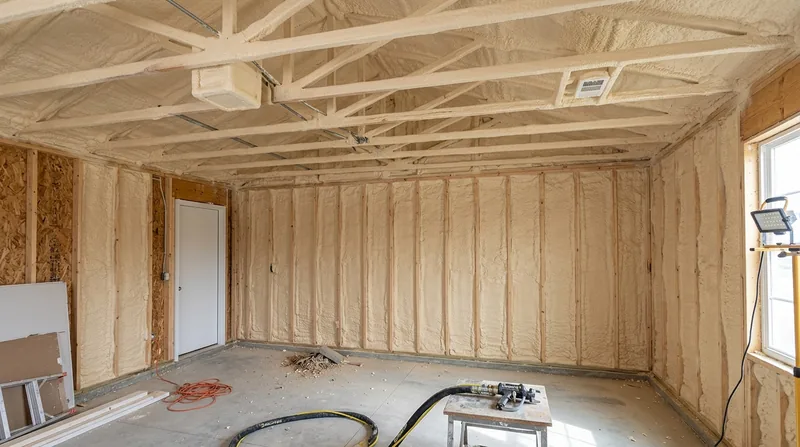




Garage spray foam insulation in Champaign addresses a real problem: garages attached to homes or standing alone take the full force of Central Illinois winters and summers, and they leak conditioned air through uninsulated walls and ceilings into the rooms and spaces above. The open farmland terrain here means wind drives cold deep into wall cavities, while hot humid summers push moisture inward through every gap. When a garage sits below a bedroom or office, temperature swings and energy loss ripple upstairs. When it functions as a shop or storage space, an uninsulated garage wastes money every heating and cooling season. We spray foam garage walls and ceilings to stop that leakage, stabilize temperatures, and cut the load on your HVAC system. The work is straightforward, the payback is measurable, and it transforms how a garage performs year-round.
Why Garage Insulation Matters in Champaign's Extreme Seasons
Champaign County sits on exposed farmland with no natural windbreaks, so winter cold arrives hard and stays. Summer heat bakes through roof decks and thin walls. A garage with no insulation becomes a thermal bridge that pulls heat out of a home in winter and dumps hot air into conditioned rooms in summer. Rim joists and band joists around the garage perimeter are often completely open to the elements. Older garages near downtown Champaign and Urbana frequently have no ceiling insulation at all, just bare joists and rafters. Newer subdivisions toward Savoy and Mahomet built better, but many still rely on vented attics and uninsulated garage walls that let the outdoor climate dictate indoor comfort. A single uninsulated garage can cost you hundreds of dollars per year in wasted heating and cooling.
- Spray foam seals wall cavities and ceiling joists so conditioned air stays inside and outdoor temperature swings stay out.
- Closed cell foam resists moisture and provides structural stiffness, making it ideal for garages that sit below living spaces.
- Open cell foam offers a lower-cost option when the garage is detached or when sound dampening for a workshop matters more than maximum R-value.
- Air sealing around garage doors, electrical penetrations, and rim joists stops the leakage that insulation alone cannot fix.
Every one of these approaches stops the temperature swings that make a garage uncomfortable and costly to condition.
Key info: A garage attached to a home in Champaign or Urbana loses heat through the common wall and ceiling just as fast as it gains it in summer. Foam insulation on that wall and ceiling pays for itself by cutting the heating and cooling demand in the rooms directly above.
How We Insulate and Seal Garages in Champaign: The Process
Garage foam insulation starts with a site inspection to identify where air leaks and where insulation is missing or failed. We look at the common wall between the garage and the home, the ceiling or roof deck above, rim and band joists around the perimeter, and any penetrations for utilities or doors. We then measure the space, confirm the substrate is clean and dry, and recommend open cell or closed cell based on your priorities and budget. Once you approve the scope and the R-value thickness, we set up temporary ventilation, mask off areas that should not be foamed, and spray the foam in controlled passes. After cure, we trim excess foam flush with the framing and discuss any finishing steps with you. Our work includes a written estimate with R-value and thickness specifications, so you know exactly what you are paying for before we start.
- We inspect the garage for air leaks, moisture, existing insulation, and structural condition before quoting.
- We discuss closed cell versus open cell based on your use, budget, and whether the garage is attached or detached.
- We set up mechanical ventilation during and after spraying to manage fumes and ensure safe re-entry within 24 to 48 hours.
- We spray in multiple thin passes to achieve the thickness and density specified in your estimate, never rushing a single-pass job.
- We trim and finish the foam flush with framing so drywall, paneling, or paint can go over it cleanly.
This methodical approach means the foam cures properly, adheres fully, and delivers the R-value and air sealing you paid for.
Example: A homeowner in Mahomet with a two-car garage attached to the master bedroom complained that the bedroom stayed cold in winter even with the furnace running. We foamed the common wall and the garage ceiling, sealed the rim joist, and added air sealing around the garage door. The bedroom temperature stabilized, and the heating bills dropped noticeably. The same homeowner's shop area above the garage became usable year-round for woodworking without space heater waste.
Spray Foam Methods for Garage Insulation
| Approach | Description | Best for |
|---|---|---|
| Closed Cell Spray Foam | High-density foam that resists moisture, provides structural bracing, and delivers R-6.5 to R-7 per inch. Requires controlled equipment and trained application. | Garages attached to homes, rim and band joists, spaces prone to condensation or seasonal moisture, detached garages in humid climates. |
| Open Cell Spray Foam | Lower-density foam that is permeable to moisture vapor, offers good sound dampening, and delivers R-3.5 to R-4 per inch. Lower material and labor cost than closed cell. | Detached garages, workshop spaces where noise reduction matters, budget-conscious homeowners, garages in dry climates or with good existing vapor barriers. |
| Partial Foam with Air Sealing | Foam the common wall and ceiling between garage and home, then air seal rim joists, door frames, and utility penetrations with caulk or foam strips. | Attached garages where the main heat loss is through the shared wall, budgets that prioritize the highest-impact zones first. |
| Full Garage Enclosure | Spray foam walls, ceiling, and all rim joists, then seal doors and vents. Creates a fully conditioned or semi-conditioned garage space. | Detached garages used as shops, studios, or storage; attached garages where comfort and energy savings justify full-envelope treatment. |
Garage Spray Foam Insulation Cost in Champaign: What to Expect
Garage insulation pricing depends on the scope, the foam type, the size of the space, and access. A typical two-car garage with walls and ceiling foamed in open cell runs starting at $1,200 to $2,500. Closed cell costs more because the material is denser and the application requires precision equipment. A partial job (common wall and ceiling only) often runs lower because it covers less area. Detached garages with good access cost less than attached garages where we must protect the home interior and manage cure time carefully. Travel is included in our Champaign-area pricing, so no separate mileage fee. The best way to know your actual cost is to call us for a free written estimate at (447) 895-0419. We specify the R-value, thickness, and square footage so you understand exactly what you are paying for, and you can compare that to other quotes with confidence. Visit our pricing page for more detail on how we structure estimates and what factors move the needle.
What to Look for When Hiring a Spray Foam Insulation Contractor Near Champaign
The spray foam market includes one-day crews from out of state who spray a job fast and disappear, national franchises with inconsistent quality, and local shops that stand behind their work and stay reachable when questions arise. When you call a contractor, ask for a written estimate that specifies R-value per inch, total thickness, and square footage. Ask whether they use mechanical ventilation during cure and what re-entry window they recommend (24 to 48 hours is standard). Verify that they are fully insured and ask for proof of coverage. Check references from local jobs, not just a website testimonial. Understand that permitting requirements vary by city in Greater Champaign, so a good contractor will tell you what applies at your address and help you navigate it, not promise to pull all permits without knowing your municipality. If your garage sits in an HOA community, confirm that the contractor understands any architectural rules that might apply to exterior work. Most garage insulation does not require permits, but air sealing or structural work sometimes does, so a contractor who knows the local building department is worth more than one who guesses. Get at least two estimates so you can compare scope, materials, and price. Contact us at (447) 895-0419 or visit our contact page for a free estimate with no obligation.
Garage Spray Foam Insulation in Champaign: Pricing Guide
| Service | Price | Details |
|---|---|---|
| Open Cell Garage Walls and Ceiling | Starting at $1,200 | Two-car garage, walls and ceiling, open cell foam, includes trim and cleanup, typical access conditions |
| Closed Cell Garage Walls and Ceiling | Starting at $2,000 | Two-car garage, closed cell foam for moisture resistance and structural strength, higher R-value, controlled application required |
| Partial Scope with Air Sealing | Starting at $800 | Common wall and ceiling between garage and home, rim joist air sealing, door and utility penetration sealing included |
| Full Detached Garage Enclosure | On estimate | All walls, ceiling, rim joists, and doors; size, foam type, and access determine final price; call for site visit |
| Travel | Included | No separate mileage or call-out fee within Champaign and surrounding service areas |
| Free Written Estimate | Free | Includes R-value, thickness, square footage, and scope; response within 24 hours, no obligation to book |
Indicative pricing, the exact cost depends on square footage, finish, and site access. Free personalized estimate within 24h at (447) 895-0419.


